
For general contractors, property managers, and IT firms
Your Low Voltage Partner on Montana Builds
Structured cabling, networks, cameras, and access control done to spec, on schedule, and handed back documented.
For general contractors
Bring Us In Before the Slab Pour.
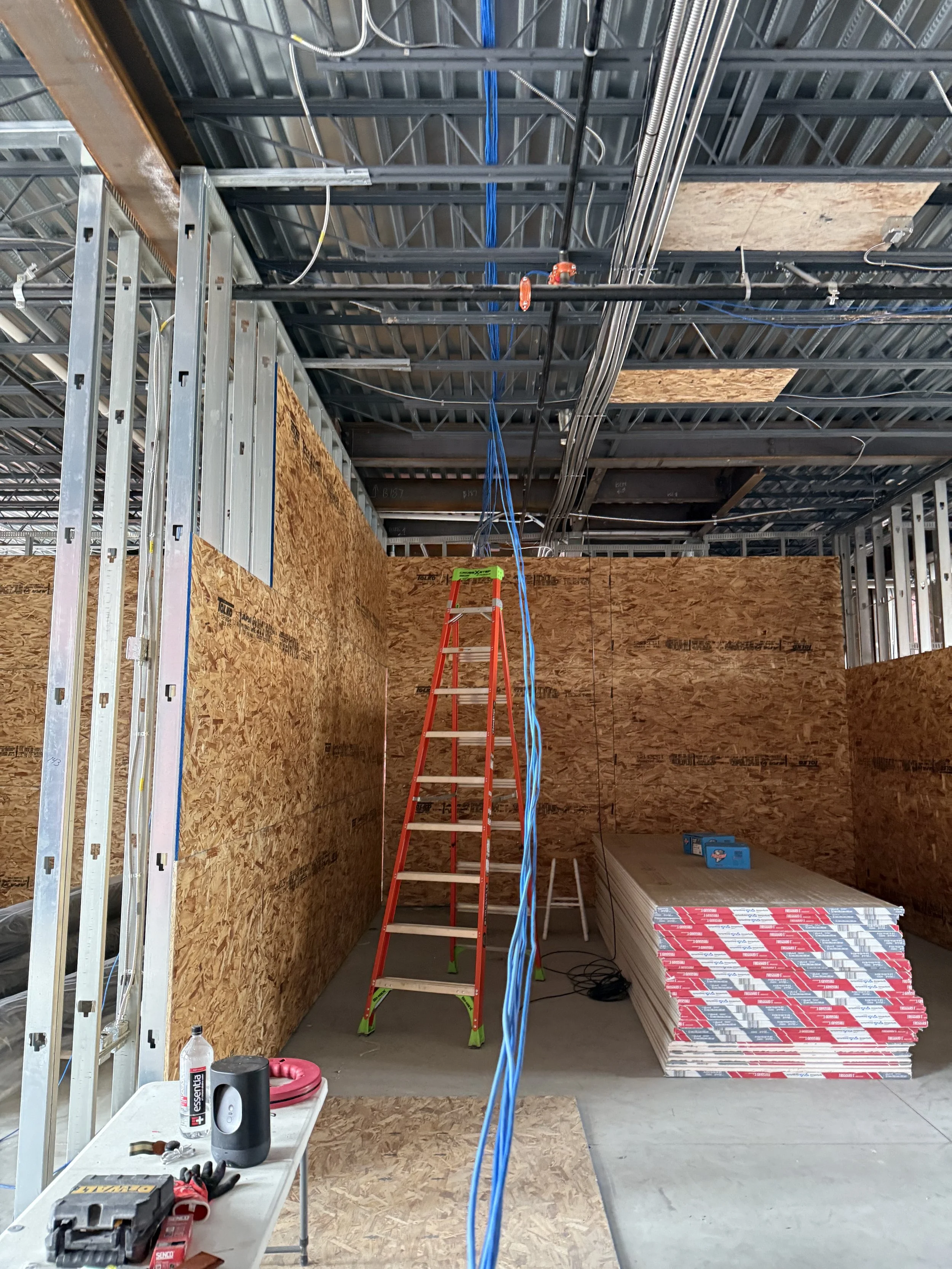
The cheapest conduit is the one placed before concrete and drywall. We flag the deadlines that can't be undone (slab sleeves, in-wall pulls before insulation, the rough-in we need from your electrician) and sequence our work around the other trades.
- Division 27 and 28 scope: structured cabling, cameras, access control
- Tested, labeled runs with an as-built drop schedule at closeout
- Leviton-certified installers
- We wire the door; your door hardware vendor supplies and installs the locks
- A budgetary range early, a firm number once the counts are confirmed
- SAM registered: UEI KBNDHXM6XGZ3, CAGE 25VQ0
Access control on your build
Who wires the door? We do.
On a lot of commercial builds, the door hardware is spec’d and the access control is spec’d, but nobody owns the wiring between them until the doors are already hung. Bring us in at rough-in and that gap never opens: we run the cable to every controlled door, coordinate with your door hardware vendor, and land it all at the access panel.
- Rough-in at each controlled door before drywall: card reader, door contact, request-to-exit, and lock power
- Coordination with your door hardware vendor on strikes, maglocks, and electrified locks
- We wire and connect the controller; your door hardware vendor supplies and installs the locks
- Doors already in? Call anyway. We’ll walk it and tell you the cleanest way to get cable there
Read: Who Wires the Door? The Access Control Gap on Commercial Builds
How it works
What the Job Looks Like.
- 01
Send the plans and scope
Drawings, a drop count, or a walk: send what you have. We read the electrical and architectural sheets too, because low voltage scope often hides there.
- 02
A written proposal
A budgetary range early if counts are still open, a firm number once they are confirmed, tied to the drawing set and revision we priced from.
- 03
Rough-in on your schedule
We flag the deadlines that can't be undone and work around the other trades and your electrician's conduit.
- 04
Terminate, test, label
Every run terminated, tested, and labeled to match the patch panel before we leave.
- 05
Closeout
An as-built drop schedule, photos, and test results for your closeout package.
GC questions
Can you work from our plans?
Yes. Send the drawing set and we will price from it, and we will tell you if low voltage scope is buried on the electrical or architectural sheets.
Can you send a certificate of insurance?
Yes. We send a certificate of insurance on request.
Who wires the door?
We do. We run reader, door contact, request-to-exit, and lock power to each controlled door and connect the controller. Your door hardware vendor supplies and installs the locks.
Do you provide test reports?
Every run is tested before we leave and the results go in your closeout package. Certified test reports from a cable certifier are available when the spec calls for them.
Do you work outside Bozeman?
Yes. Bozeman is home base; we cover Big Sky and southwest Montana and travel statewide for GC and partner work.
For IT firms and integrators
Your scope. Our hands. Your client stays yours. Out-of-state IT firms and national integrators use us as their Montana field team. You set the scope and the standard; we show up, do the work, document it, and hand it back. See Partner Field Services
Send us the scope. Plans, a drop count, or a walk-through: send what you have to info@bigskywired.com and we'll come back with a plan. Bozeman is home base; we work across Big Sky, the Gallatin Valley, and southwest Montana, and travel statewide for partner work.