
At a glance
Client: A local biomedical company
Type: Regulated campus, multiple buildings
Services: Cat6 structured cabling, high-bay terminations, underground fiber backbone, termination and testing
Scale: 3 buildings, 14 Cat6 drops, about 500 feet of 12 strand fiber, about one week on site
The constraint
This is a regulated company, and some of the devices on its network are environmental monitors that raise alarms the moment they lose connection. Downtime was acceptable only if it was announced ahead of time. The network itself runs on port-assigned VLANs managed by the client's own infrastructure team, so any change to a patch cable had to go through them first. They needed new drops in three buildings and fiber to a newer one, from a contractor who would stay inside those lines.
Scoping it in the right order
We walked the campus with the infrastructure manager and split the work on purpose. The Cat6 drops were ready to price that week. The fiber run depended on what was underground, so we walked the path before putting a number on it rather than guessing. Every estimate spelled out the same boundary: cabling, termination, and testing only. No patch cables, no switch ports, no configuration. New runs get landed, tested, and handed to the client's team.
Phase 1: Fourteen drops across three buildings
The crew worked building by building. The biosciences lab came first: four runs through the drop ceiling, each terminated to a keystone with a service loop, ready for the client's devices. Then the warehouse, where two runs followed the structural steel to the second level and were fished down through the insulation to terminations about 20 feet off the floor. The main office got eight runs, partly in surface raceway where there was no concealed path, landed on two 4-port surface mount boxes. Along the way the client added a request: retermination of existing drops in an executive office to keystones that fit its wall plates.
Every new run got continuity testing, link verification, and PoE verification to any powered device.
Phase 2: A fiber backbone to the newer building
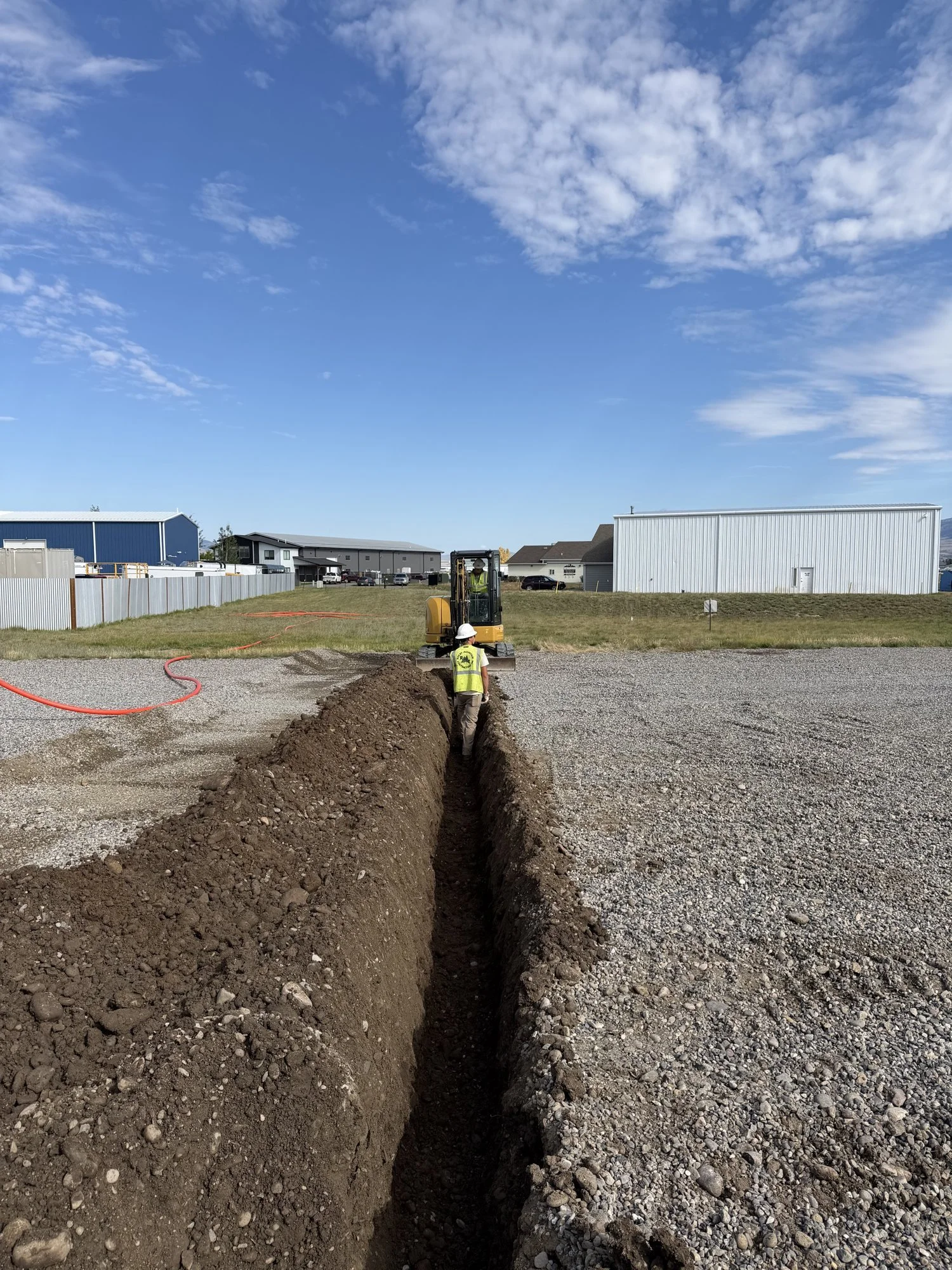
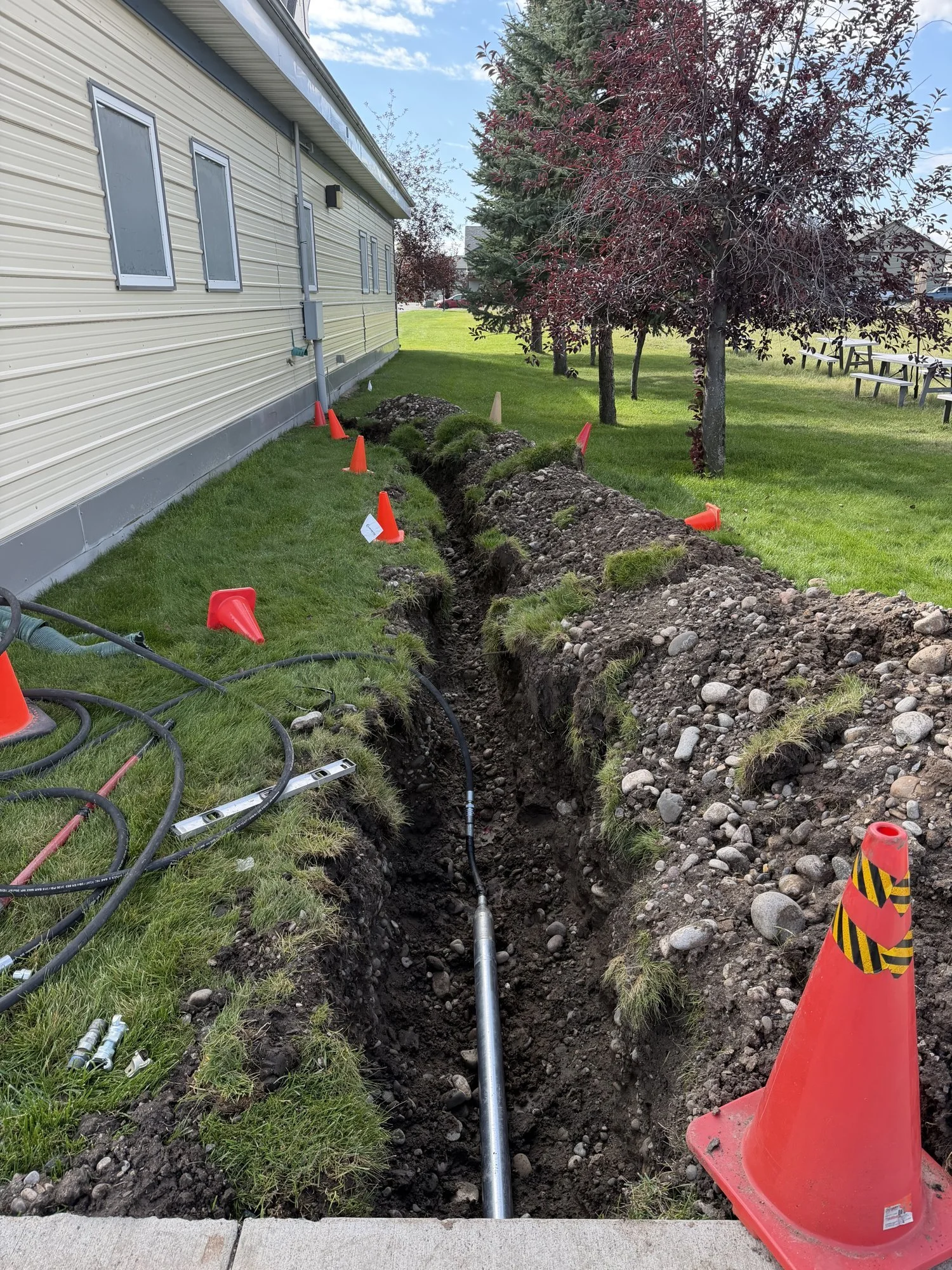
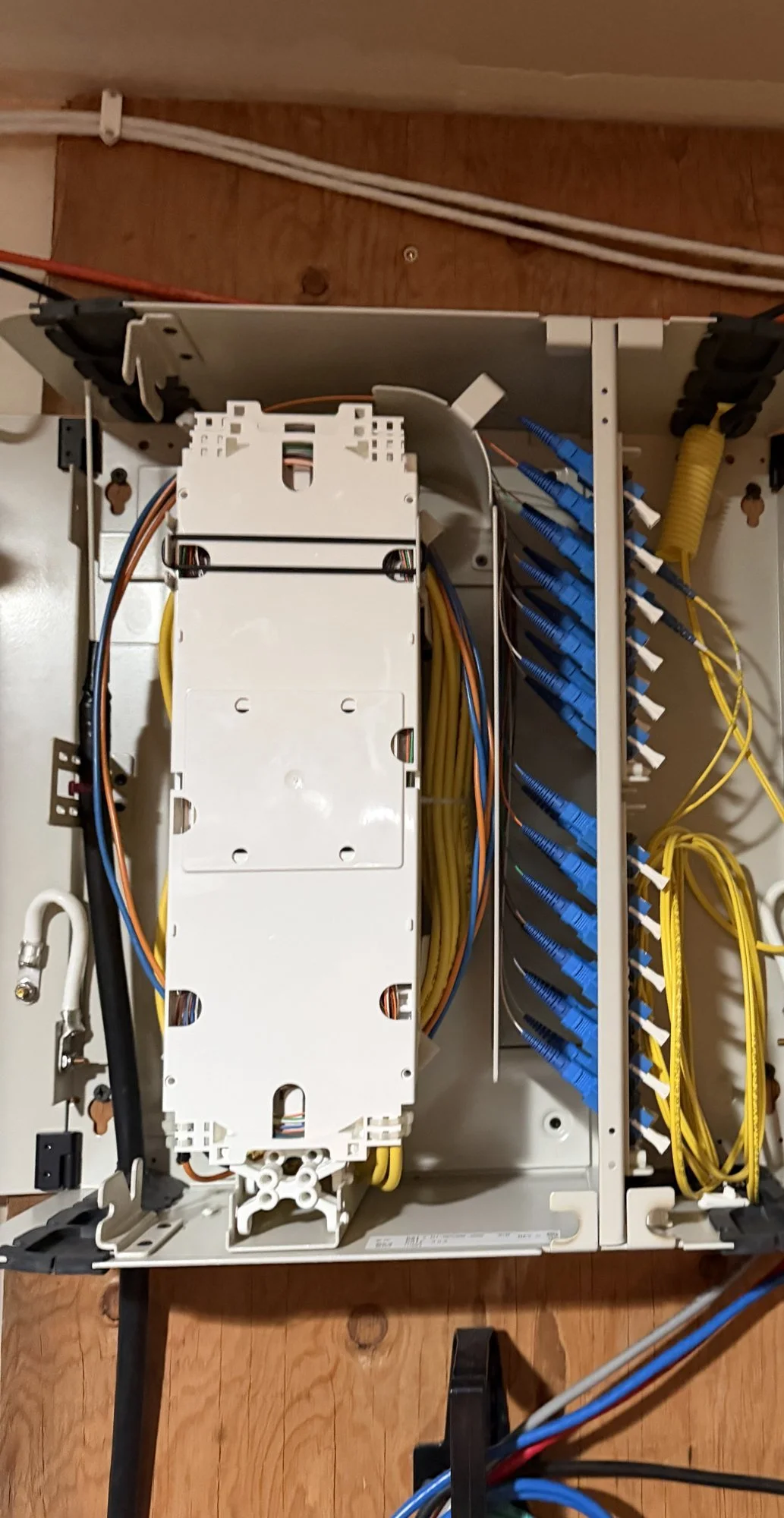
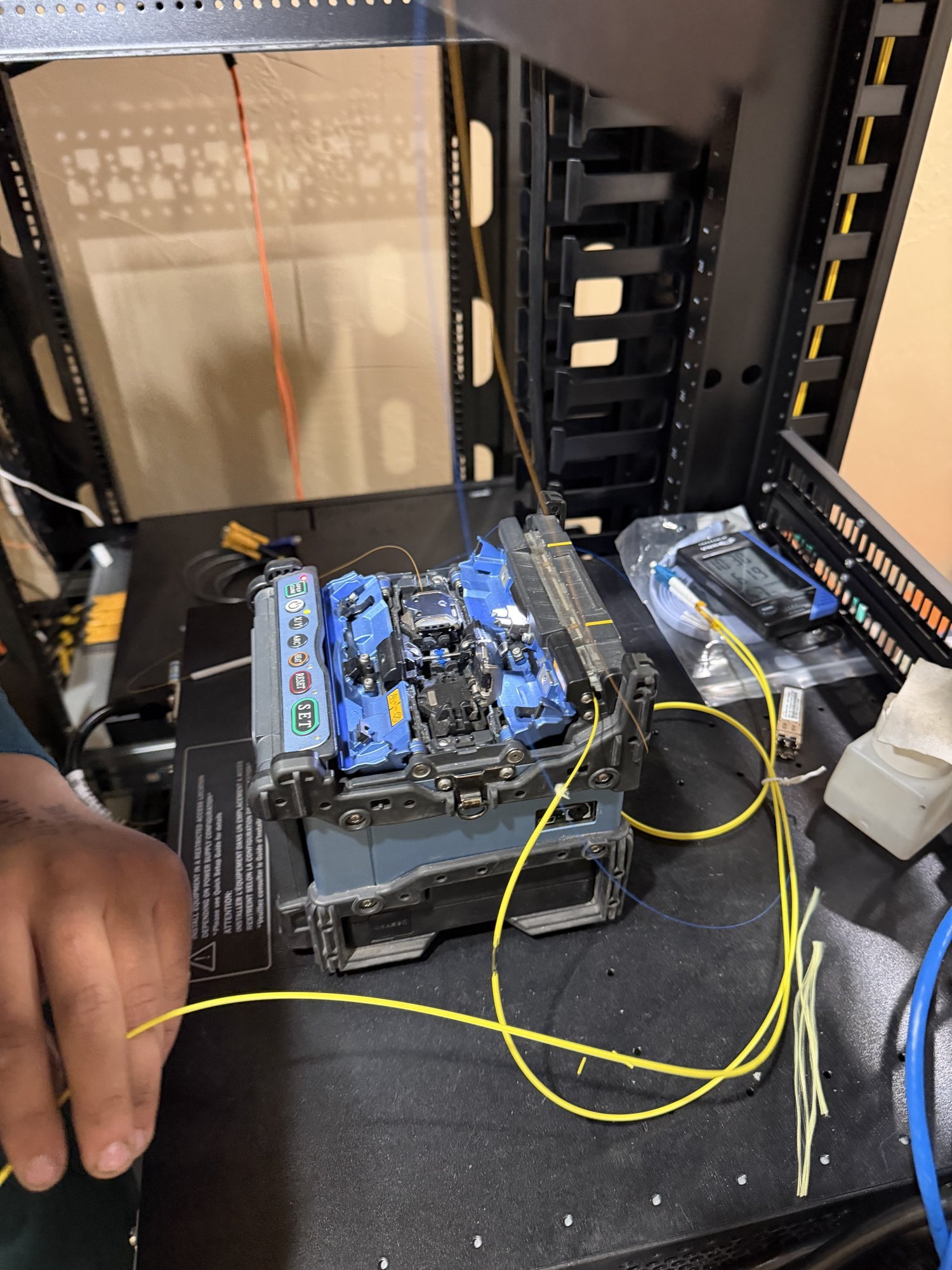
Next came a new 12 strand fiber backbone, about 500 feet from the main office out to the warehouse building. The route uses an existing conduit to the lab building's exterior junction box as a pass-through, then more than 300 feet of new trenched conduit the rest of the way. We coordinated the underground work with a local telecom construction partner, including utility locates before anything was excavated, then terminated the fiber at both ends and tested the completed link optically before handing it off.
What's in place now
14 new Cat6 drops across the main office, biosciences lab, and warehouse
High-bay warehouse terminations with service loops
Executive office drops reterminated to match existing wall plates
About 500 feet of new 12 strand fiber backbone linking the warehouse building to the main office
Every run tested and handed off, with the client's VLANs and switch ports untouched
The result
In about a week on site, the client's infrastructure team got new connectivity in every building they asked for and a fiber link to their newest building, without losing control of a single port. They have since brought us back for the next phase on campus.
Running a regulated facility or a multi-building campus?
Labs, manufacturing, and anywhere the network team needs a cabling partner who stays in their lane: let's talk about your next project.
