
What to Look For in a Low-Voltage Sub on a Commercial Build
On a commercial build, the low-voltage sub is easy to under-think. The cabling, the racks, the access points, the cameras: it all feels like something you can drop in near the end once the walls are up. Then the drywall goes on before the data runs are pulled, or the electrician's conduit does not line up with where the racks actually need to be, and suddenly a small scope is causing big, expensive problems.
Whether you are the GC running the job or the owner commissioning it, here is what separates a low-voltage sub who protects your schedule from one who quietly costs you money.
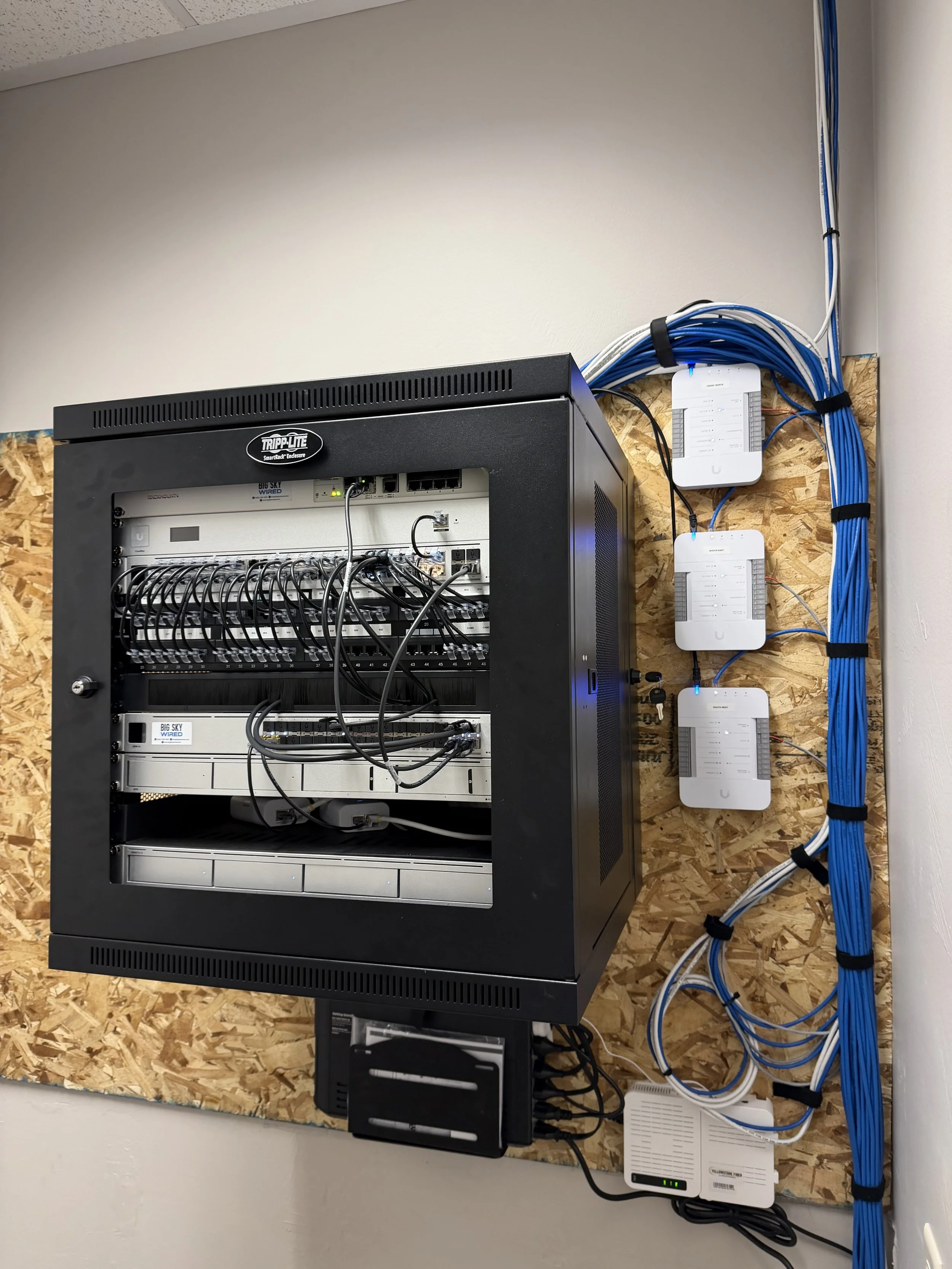
The thing that matters most: timing
The single biggest difference between a good low-voltage sub and a cheap one is whether they understand construction sequencing, because low-voltage work has hard deadlines that close permanently.
The in-wall cabling has to go in before the drywall and insulation. Anything crossing under a slab has to be sleeved before the pour. And most of it depends on the electrician: the low-voltage conduit and rough-in usually have to be in place before the cabling sub can pull to every device location and back to the rack. Miss that coordination and the choices left are all bad ones, from fishing finished walls to surface-mounting raceway, which drives the labor 25 to 30 percent higher than it needed to be.
A sub who knows this shows up early asking about the drywall date and the electrician's rough-in schedule, not late asking where to plug in. That one habit prevents most of the expensive surprises on a build.
Reading the scope where it actually lives
On real commercial documents, low-voltage scope is rarely sitting on a clean, clearly labeled sheet. It hides in the electrical sheets, in architectural detail drawings, in responsibility schedules, and in coded notes. A good sub reads the whole set and finds it, including the responsibility schedule that says who actually owns conduit, rough-in, and cabling, because on many jobs an owner's vendor or another trade carries part of it.
Getting that right before the bid is what keeps a project from discovering a gap in the low-voltage scope halfway through construction.
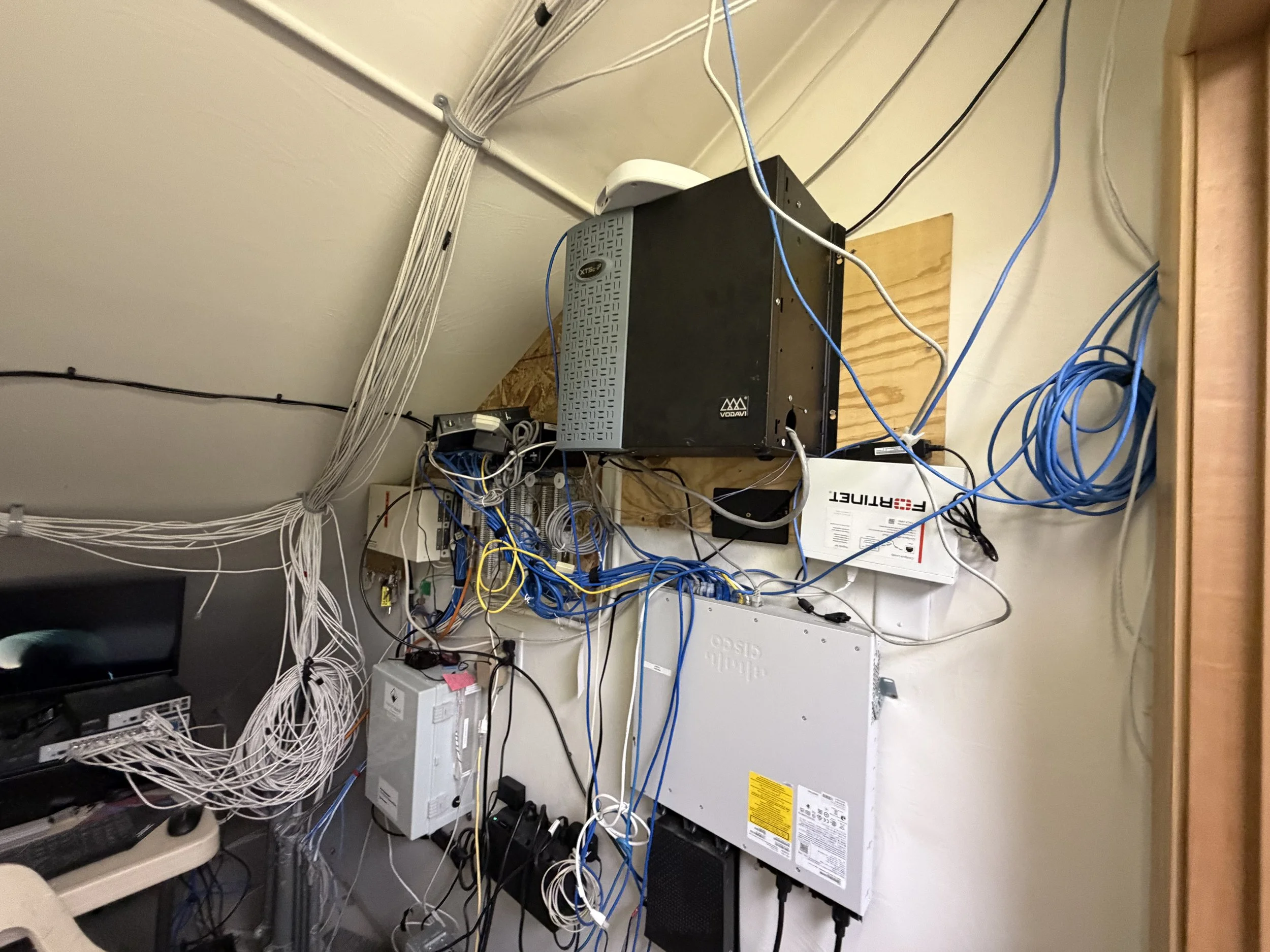
An unfinished, undocumented network rack.
What a good low-voltage sub actually brings
Beyond timing and takeoff, the things that separate a professional low-voltage sub on a commercial job:
Fluency in the language of the build. Div 27 communications and Div 28 electronic safety and security are their scope, and they coordinate with the GC and electrical team as part of the project, not as an afterthought.
Certified, tested cable. Not just "it works," but documented test results per run, so the network is proven before anyone relies on it.
Labeling and as-builts. Every run labeled, a drop schedule and documentation handed over at closeout, so the next person who touches the system knows what is where.
Clean, code-conscious installs. Dressed racks, proper pathways, firestopping where required.
Staying in their lane. A good sub tells you plainly what is theirs and what belongs to the electrician, the door hardware vendor, or the owner's vendor, before the work starts.
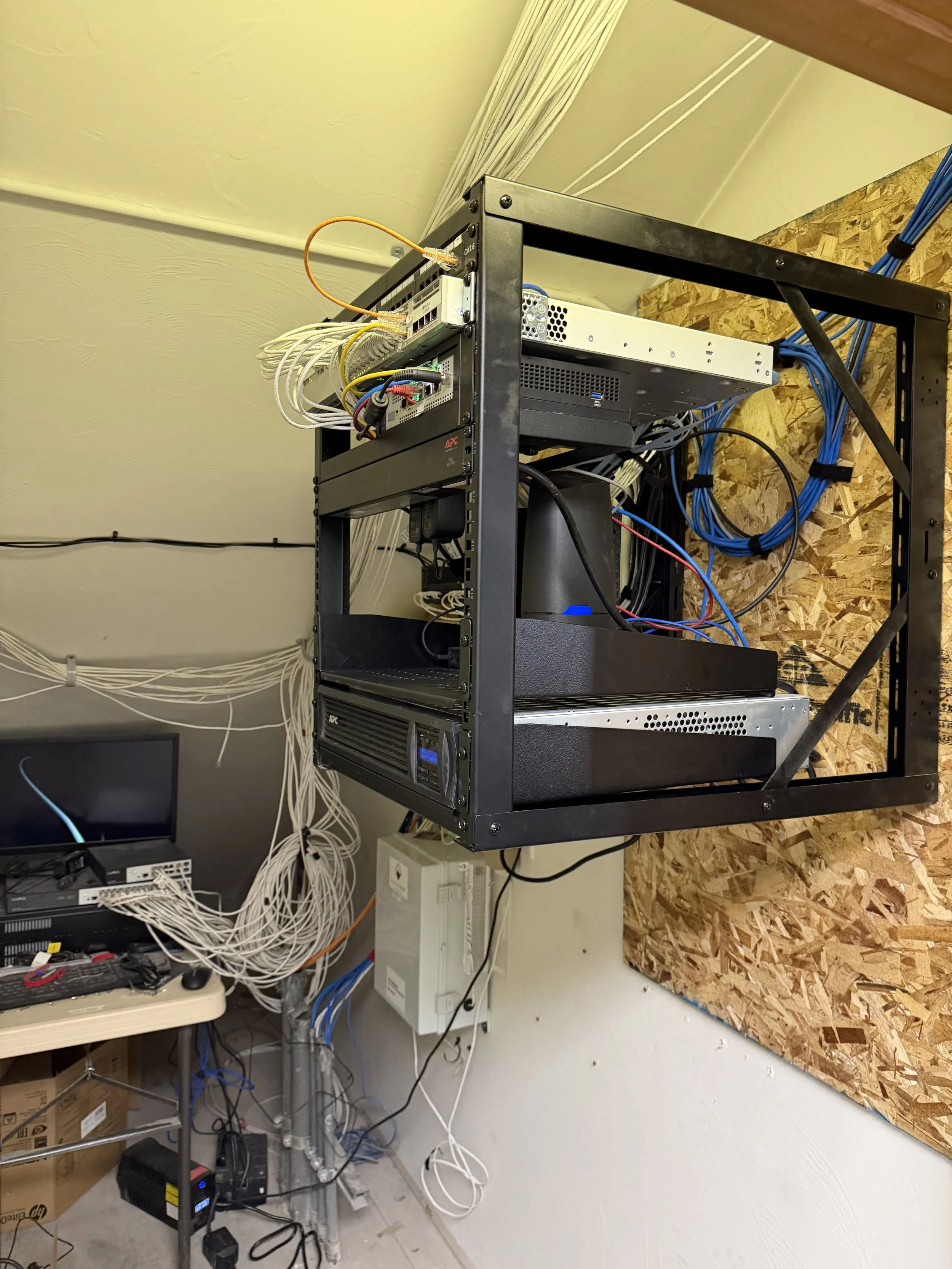
A finished, documented network rack room at commercial closeout.
Why it matters to the GC and the owner
For the GC, the payoff is fewer RFIs, no buried pulls to jackhammer back out, and a sub who works to your schedule instead of blowing it. For the owner, it is a system that passes, that is documented, and that will not need rework a year in because someone rushed the part nobody was watching.
The low-voltage scope is a small line on a big project, right up until it is the thing holding up your certificate of occupancy.
Bring the sub in early
The best time to involve your low-voltage sub is before the walls are framed, not after. Early coordination on conduit, pathways, and rack locations is what keeps the whole scope clean and on schedule.
That is how we work. Learn more about our commercial networking and structured cabling for builds across the Bozeman and Gallatin Valley area, or send us your plans and we will walk the scope with you.
